
Guardamar del Segura
A town of some 18,500 people at the mouth of the river Segura, with eleven kilometres of coast and a pine forest that was planted, tree by tree, to stop the dunes burying it.
The town
The old town stood inside the castle walls on the hill until the earthquake of 1829 brought it down. What you walk through today was rebuilt below on a grid of straight streets; the ruins are still up there, and the walk is worth it for the view over the river mouth.
It is the southernmost municipality in Spain where Valencian is spoken, and small enough that the everyday things stay within walking distance of each other.
- Nearest restaurant
- 200 m
- Nearest supermarket
- 400 m
A forest that was planted on purpose
In the 18th century the pines along this coast were felled to build warships and never replanted. With no roots to hold it, the sand started moving: by 1896 the dunes were advancing into the north of the village, burying gardens and reaching the first houses.
A royal order of 2 December 1897 approved a plan to stop them. The forestry engineer Francisco Mira y Botella used the Bremontier method — rows of marram grass and reeds behind low palisades, replanted each time the sand buried them, until a counter-dune four metres high had built up. Roughly 600,000 pines, 40,000 palms and 5,000 eucalyptus went into some 700 hectares. The work was finished in 1929.
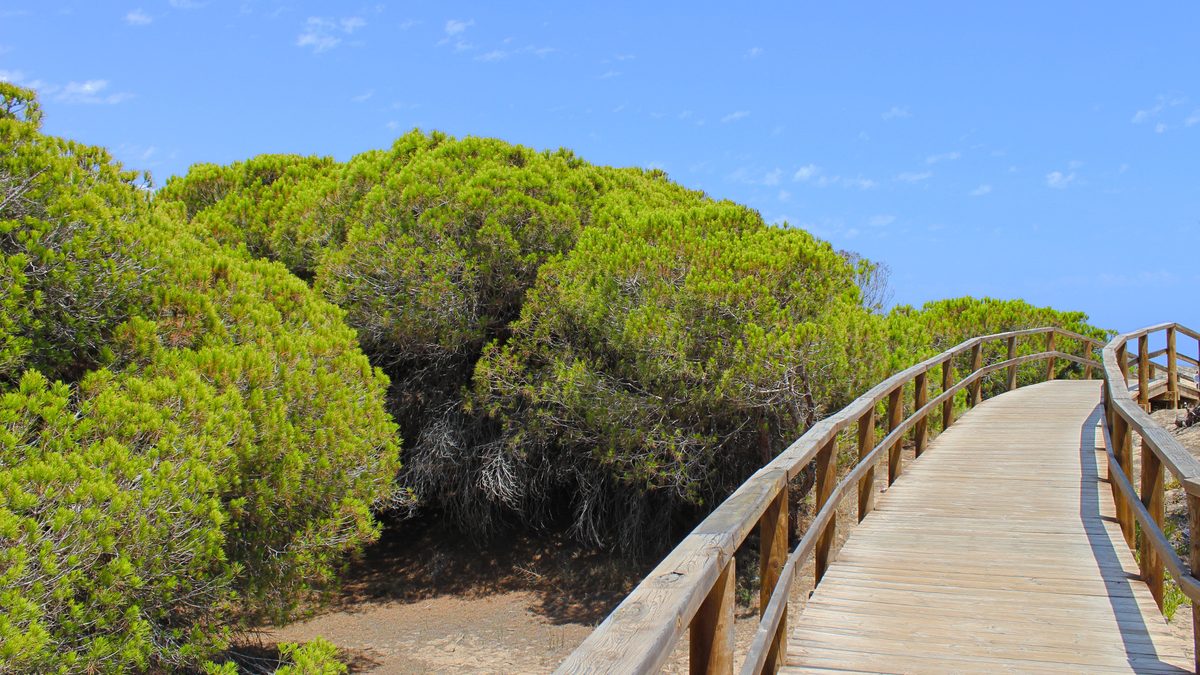
What grew out of it is 800 hectares of forest between the town and the sea, crossed by boardwalks and divided into two parks, Alfonso XIII and Reina Sofía. The town still marks it every 31 January with a tree-planting festival.
Beaches
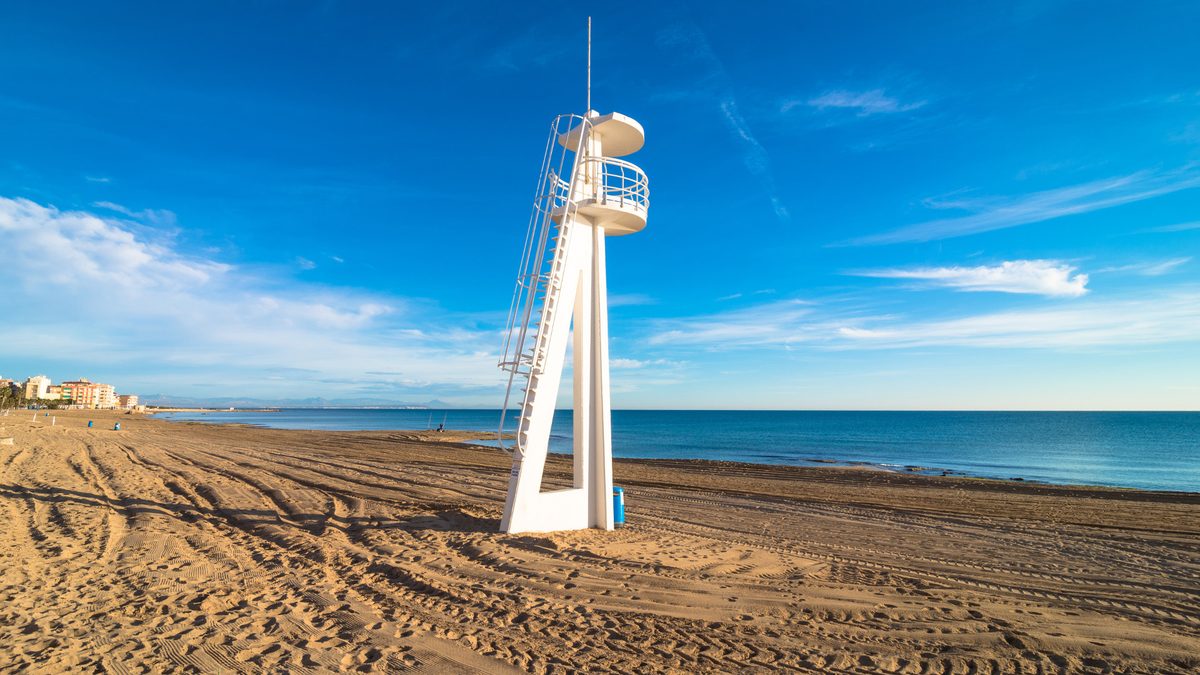
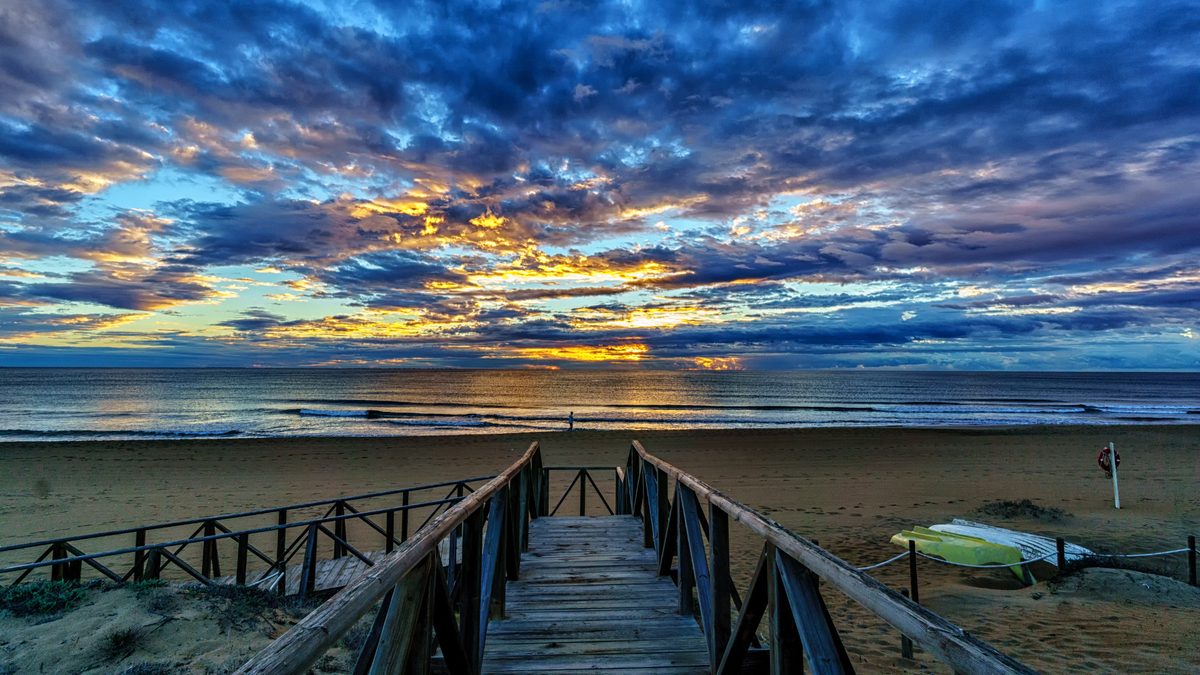
Eleven kilometres of coast. The first two are within walking distance of the house.
- Playa de La Roqueta
1,180 m long · Blue Flag since 1987 - 100 m
- Playa Centro
2,600 m long · Blue Flag since 1987 - 200 m
- Playa del Moncayo
1,460 m long · Blue Flag - 750 m
- Playa Babilonia
- 1.3 km
Worth seeing in the town
- Rábita Califal — an Islamic ribat in the dunes, founded in 944 and the oldest in Spain.
- La Fonteta — a Phoenician port settlement at the mouth of the Segura, 8th to 6th century BC.
- The castle — Arab above, a Gothic wall below. The upper part was destroyed in the 1829 earthquake.
- Cabezo Lucero — an Iberian settlement and necropolis, 6th to 3rd century BC, where the Dama de Guardamar was found.
- Molino de San Antonio — a windmill built around 1915 on a medieval one.
Worth the drive
Distances by road from the house.
- Aquopolis water park, Torrevieja
- 10.1 km
- Habaneras shopping centre, Torrevieja
- 10.4 km
- Torrevieja marina
- 12.0 km
- Salinas de Santa Pola nature reserve
- 12.2 km
- Salt museum, Santa Pola
- 14.4 km
- Las Colinas golf course
- 16.7 km
- Zenia Boulevard shopping centre
- 18.2 km
- Cabo Roig beach
- 19.7 km
When the town fills up
- Moors and Christians — the last two weeks of July, the biggest festival of the year.
- Virgen del Rosario, the patron saint — 7 October.
- Tree festival — 31 January, a legacy of the dune planting.
Getting there
Two airports serve the area. Alicante has the wider choice of flights; Murcia is often cheaper from the UK and the Netherlands. A hire car is worth having — the beach is walkable, the rest of the coast is not.
- Alicante–Elche airport
- 24.4 km
- Región de Murcia International airport
- 52.1 km
The area in pictures

Frequently asked questions
Which beach is the closest?
Playa de La Roqueta, about 100 metres from the house. It is 1,180 metres long and has held a Blue Flag since 1987.
Do I need a car?
Not for the beach or the shops — both are a walk away. For Torrevieja, Santa Pola, the salt lakes or the golf courses you will want one.
Is there anything to see besides the beach?
A ribat from the year 944, the oldest in Spain, standing in the dunes; a Phoenician port settlement at the river mouth; the castle ruins above the town; and 800 hectares of pine forest with boardwalks through it.
What is the pink lake?
Las Salinas de Torrevieja, a salt lagoon about twelve kilometres away. The colour comes from algae and the bacteria that live in very salty water; it is strongest in the summer months.
Is the beach suitable for children?
Playa de La Roqueta and Playa Centro are wide, sandy and shelve gently. Both have food and drink nearby.
When is the town at its busiest?
During the Moors and Christians festival, the last two weeks of July.
Interested in this house?
It is not available to rent yet. Write to us and we will let you know when it is.
Get in touch